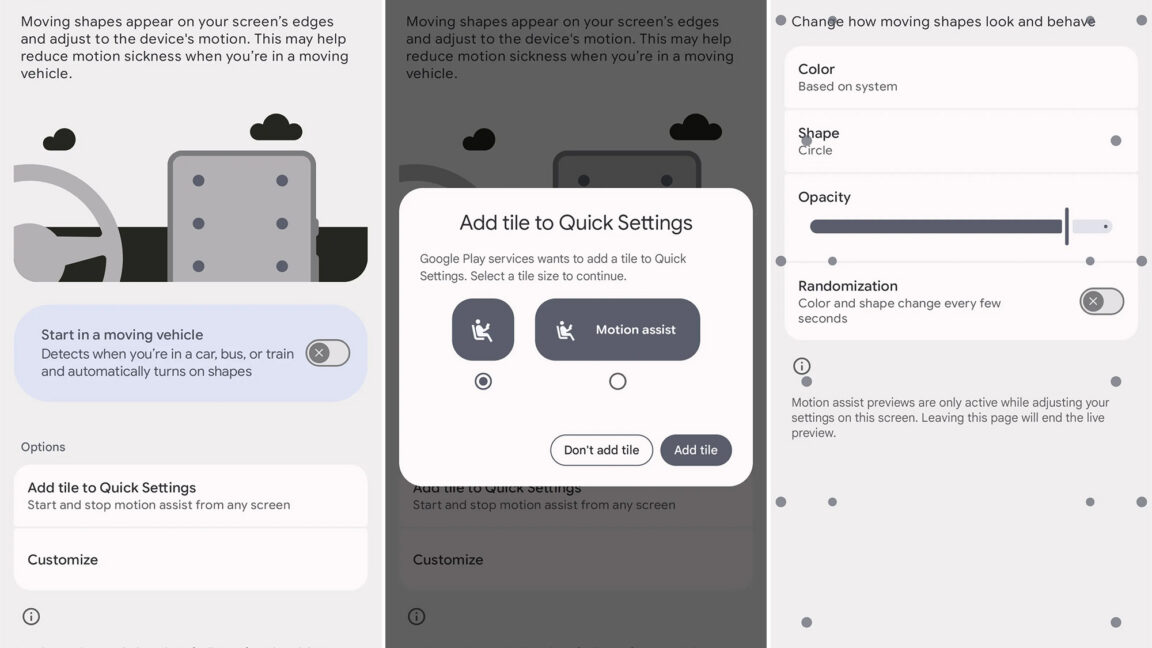
Google’s Secret ‘Motion Assist Dots’ Are Hijacking Android Workstations – The Anti‑Nausea Tech You Never Saw Coming!
After months of whispered rumors, Google finally unleashed its Motion Assist dots on Android, and they’re not just a gimmick – they’re a hardware overhaul that could turn every workstation into a nausea‑free zone. The moment they hit the market, engineers reported a sudden drop in motion‑induced fatigue, but the real kicker is what the dots are *actually* doing under the surface…
These microscopic sensors embed themselves into the display matrix, syncing with GPU pipelines in real time. Imagine a workstation that anticipates every swipe, scroll, and tilt before you even move – and then *corrects* the visual lag instantly. The hidden feature? A self‑learning algorithm that rewires your UI based on your posture, promising a future where desk‑bound headaches become a thing of the past. And that’s just the tip of the iceberg.
Early adopters are already seeing their productivity skyrocket, but there’s a darker side: the dots can also feed data back to Google’s cloud, mapping your every motion. Developers are scrambling to patch potential privacy leaks, while some claim the tech could soon *predict* user intent before you think it. What happens when the dots start learning your movements?
The rollout is rolling out fast, and rumors suggest the next firmware update will enable haptic feedback directly on the screen, turning any Android workstation into a tactile command center. Will this be the last hardware upgrade before AI takes over the entire user experience? Stay tuned – the next wave could change everything.