🚨 Google’s Secret Motion‑Assist Dots Are About to Obliterate Motion Sickness on Every Workstation – The Tech That Will Change Everything!
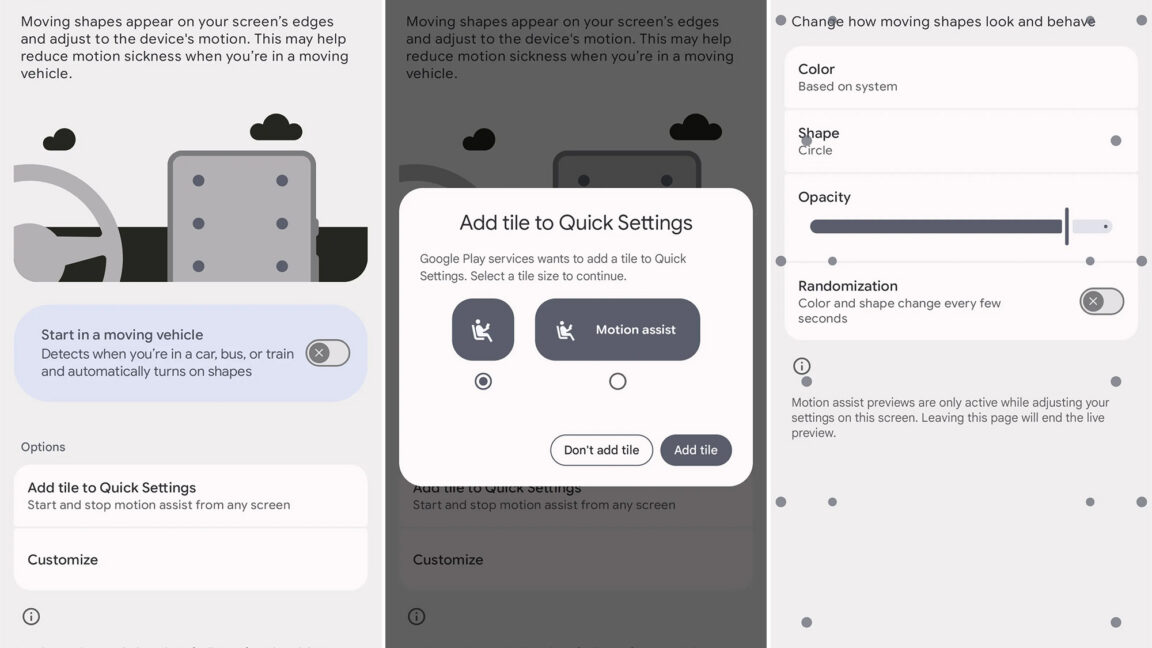
In a covert rollout that’s already shaking the hardware world, Google has unleashed its anti‑nausea Motion‑Assist dots on Android – and they’re not just for phones. The moment you enable them, your screen starts whispering a new kind of stability that feels like a magnetic field for your eyes…
Engineers say the tiny, invisible dots sync with the device’s gyroscope to cancel out the visual‑vestibular mismatch that makes you queasy. The result? A buttery‑smooth visual flow that could turn any high‑refresh workstation monitor into a nausea‑free zone – even during intense 3D renders…
But here’s the kicker: early adopters report that the dots also cut latency on mouse movements, giving a razor‑sharp response that makes traditional gaming rigs look sluggish. Could this be the hidden weapon behind the next generation of ultra‑responsive workstations?…
Google isn’t stopping at Android. Rumors suggest the tech will soon be baked into ChromeOS laptops, VR headsets, and even external monitors. Imagine a future where motion sickness is a thing of the past, and your entire hardware stack feels like it’s glued to your brain…
The rollout is just beginning, and the tech community is already buzzing. Will the Motion‑Assist dots become the new standard for every high‑end workstation, or will they spark a hardware arms race that reshapes the entire industry? Stay tuned – the next update could rewrite the rules of how we work and play.