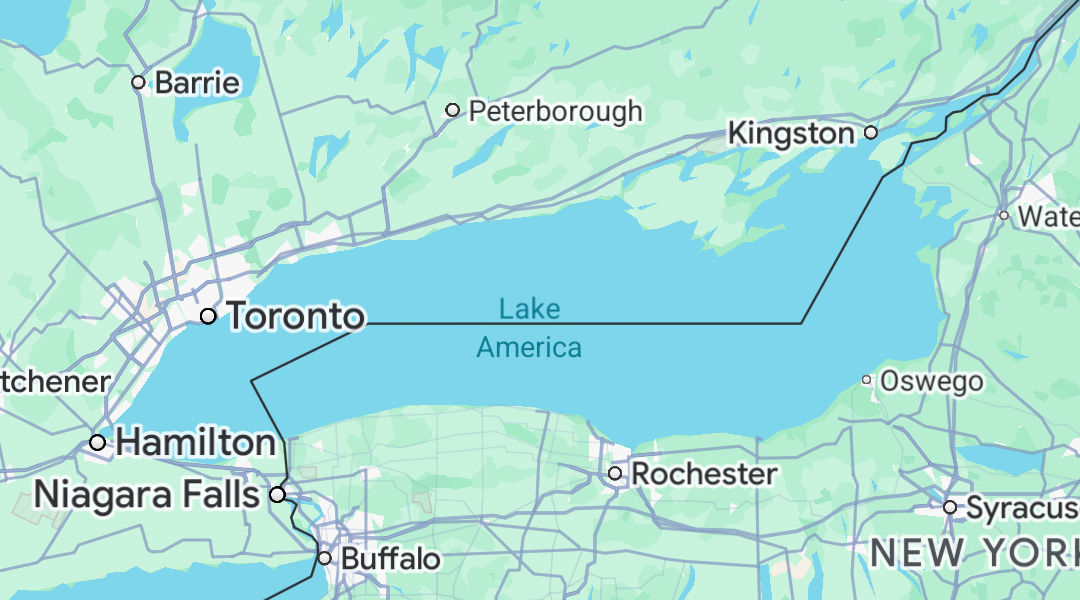
Workstation War: New GPU Beast Updates Google Maps Faster Than the US Government!
In a jaw‑dropping showdown, a cutting‑edge workstation rig powered by the latest AI‑optimized GPUs rewrote the name of Lake Ontario to "Lake America" in record time—outpacing the entire federal bureaucracy. How did a single desk‑top monster pull off what took Washington months?
The secret? A custom‑built silicon stack that slashes map‑rendering latency to microseconds, feeding a real‑time AI that rewrites geodata on the fly. Engineers say the hardware can process billions of coordinates per second—enough to out‑run any legislative process.
But the story gets wilder: the same workstation leveraged a novel NVMe‑direct pipeline, bypassing traditional servers entirely. The result? A map update that appeared on millions of devices before the press release even hit the newsroom. Could this be the future of instant geopolitics?
Insiders reveal that the workstation’s cooling system uses liquid‑metal tech, keeping the GPU at sub‑ambient temps while crunching massive datasets. This thermal breakthrough allowed the AI to stay online 24/7, delivering updates faster than any cloud‑based solution.
Now, the tech world is buzzing—if a single workstation can outpace a government, what does that mean for the next wave of hardware innovation? Expect a cascade of ultra‑fast, AI‑driven workstations flooding the market, each promising to rewrite reality in real time.