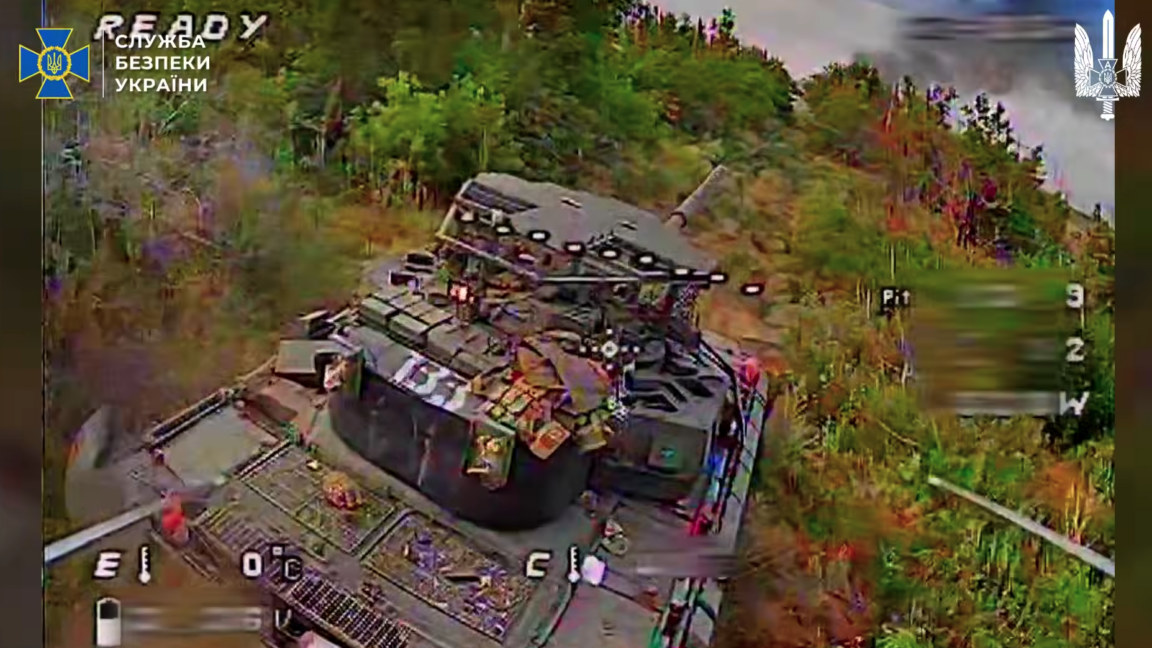
The $500 Board That Broke the $10M Tank: Inside The Brutal Hardware Hack That Ended an Era
It wasn’t a missile. It wasn’t a tank. It was a swarms of dirt-cheap, open-source flight controllers that just rendered the most expensive defensive hardware in existence meaningless. The Russian APF-32 active protection system, a multi-million dollar sensor array designed to intercept threats, didn’t fail because of software bugs. It failed because it couldn’t process the sheer volume of low-cost, high-agility hardware nodes hitting it simultaneously. For the first time in modern warfare, the 'workstation' on the enemy's rear deck couldn't keep up with the raw data throughput of a $500 drone swarm.
Here is the hardware secret that shocked defense analysts: The drones weren't using advanced AI. They were using brute-force pathing logic on extremely cheap, robust PCBs. While the tank’s radar was trying to triangulate 50 distinct targets, the drones were flying pre-calculated, non-linear trajectories that look like random noise to human operators but are mathematically perfect for saturation. It’s the difference between a high-end HPC cluster trying to parse a single complex file and a million toaster-microcontrollers sending ping-pong at once. The APF-32’s computer vision pipeline simply choked.
The 'For Now' in the headline is the real horror for hardware engineers. This isn't a permanent defeat; it's a stress test. The next iteration of tank armor will likely feature edge-computing nodes capable of local decision-making, reducing the bottleneck on the central processor. But until then, the reign of the heavy, centralized hardware stack is over. If you build workstations, servers, or defense systems, this is the wake-up call: centralized processing is a liability in a distributed attack environment. Move your inference to the edge, or get overwhelmed.
The implications for civilian tech are immediate. If a military-grade APF system can be breached by a swarm of cheap flight boards, what does that say about our smart home hubs, server racks, and IoT gateways? We are building fragile, centralized bottlenecks. The viral trend isn't just about drones; it's about the obsolescence of the 'big brain' hardware model. The future isn't the powerful workstation; it's the resilient, distributed mesh. And right now, the mesh is winning.