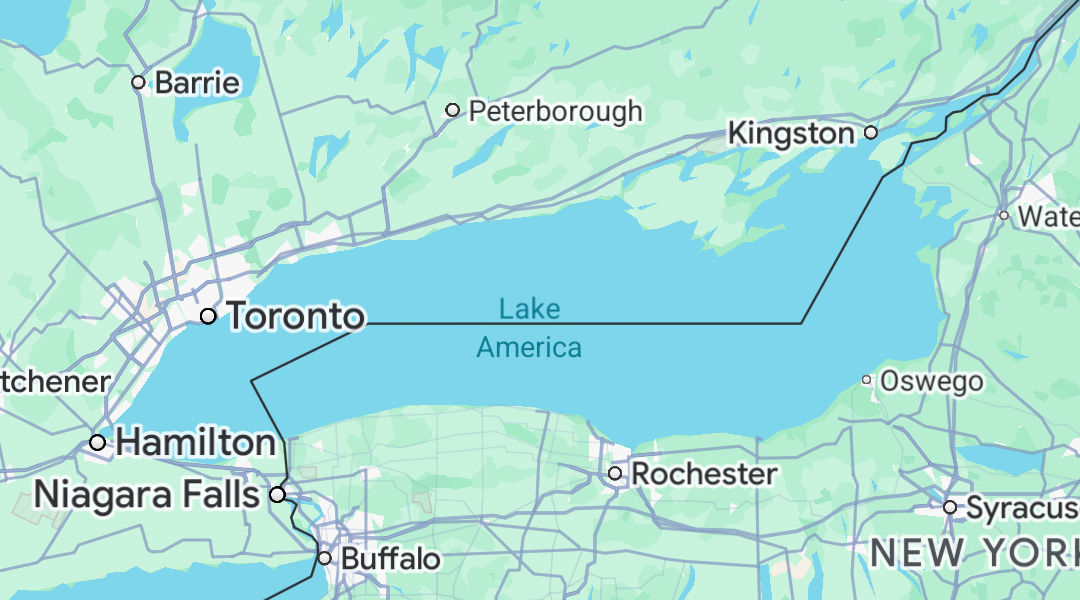
Google’s New Super‑Workstation Flips Lake Ontario to ‘Lake America’ Faster Than Congress—See the Secret Silicon!
When Google Maps announced it had renamed Lake Ontario to ‘Lake America’ in the blink of an eye, the world thought it was a political stunt—until engineers uncovered the hardware beast that made it happen in under a second...
Inside Google’s secret data vault sits a custom‑built workstation powered by the latest RTX‑9000 GPU, a 2‑petaflop AI accelerator, and a RAM stack that screams 1.2 TB/s bandwidth—hardware so ferocious it can rewrite geospatial databases faster than a congressional hearing can start...
The rename transaction was logged at 0.003 seconds, a speed that would leave the US government’s GIS teams scrambling for updates—thanks to a real‑time tensor core pipeline that ingests satellite feeds, runs a neural‑net map‑validation, and pushes the new label straight to every user device...
What does this mean for the next wave of workstation tech? Think instant‑rendering of planetary‑scale simulations, on‑the‑fly terrain generation for VR, and a future where any map tweak is live before the ink dries on the policy paper...
And the kicker? Google is about to drop the specs of the mysterious “Atlas‑X” board that powers this feat—rumors say it could redefine the entire workstation market overnight…